
If you have just opened your MRI report and seen the words ,like “mild disc desiccation,” you are probably feeling some version of two things at once: confused, and a little worried.
That is a completely normal reaction. The phrase sounds clinical and serious. It is the kind of term that makes most people open Google, then open three more tabs, then read a forum post that makes everything feel worse.
Take a breath. You are in the right place.
This article will walk you through what mild disc desiccation actually means, why it appears on so many MRI reports, what it does not mean, and what to bring up with your doctor at your next visit. No fear. No oversimplification. Just clarity.
The Short Answer
Mild disc desiccation means that one or more of the cushions between your spinal bones has lost a small amount of water content. It is one of the most common findings on a spine MRI, especially in adults over the age of thirty. In most cases, it is a normal part of how the spine ages not an injury, not a disease, and not something that automatically requires treatment.
That is the honest, accurate, calm version. The rest of this article unpacks it.
What Are Spinal Discs, Really?
This might be the next likely term in the report.
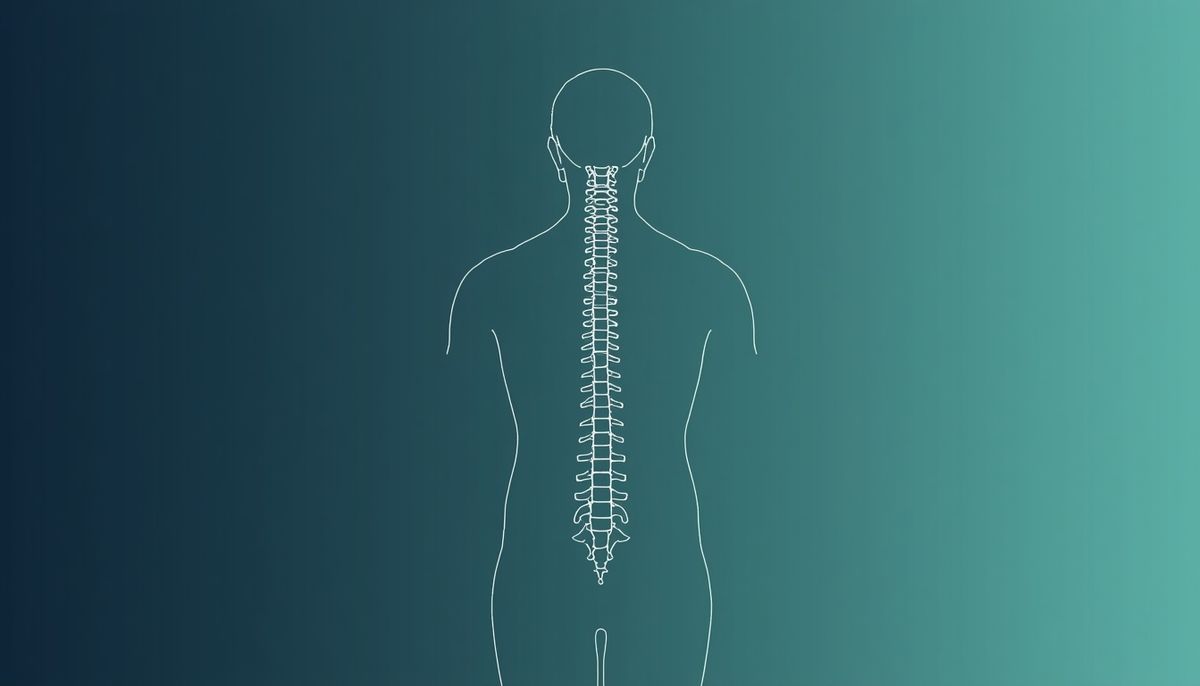
Your spine is made of a stack of bones called vertebrae. Between each pair of vertebrae sits a small, round cushion. These cushions are called intervertebral discs, and they do two important jobs:
- They absorb shock when you walk, run, jump, or even just stand.
- They allow your spine to bend, twist, and move smoothly.
A useful way to picture a spinal disc is to imagine a small jelly donut. The outer ring is tough and fibrous (this is called the annulus fibrosus). The center is soft, gel like, and full of water (this is called the nucleus pulposus).
The water content inside the disc is what gives it its bounce. It is what allows the disc to compress under pressure and spring back. Healthy discs are well-hydrated. That hydration is part of what keeps your spine flexible.
So What Does “Desiccation” Mean?
Desiccation simply means drying a loss of water content.
When a radiologist writes that a disc shows desiccation, they are describing one specific thing on the MRI image: the disc looks darker than it used to, because it has less water inside it.
That is it. The word sounds dramatic, but the meaning is straightforward.
A desiccated disc is a disc that has dried out a little. Not snapped. Not torn. Not collapsed. Just slightly less hydrated than a younger, fully plump disc.
What Does “Mild” Add to the Picture?
Radiology reports use a small, consistent vocabulary to describe how much of something is present. The most common ladder is:
- Mild — a small amount, barely noticeable, often within the range of normal aging
- Moderate — more pronounced, but still not necessarily severe
- Severe — significant, and usually warrants closer attention
When your report says mild disc desiccation, the radiologist is telling your doctor: I see a small change here. It’s subtle. It’s not dramatic.
In radiology, “mild” is a reassuring word. It is the gentlest end of the scale.
Why Does This Happen?
The most common reason for mild disc desiccation is, simply, age.
Starting in your late twenties and thirties, your spinal discs naturally begin to lose a little water content. This isn’t a flaw in your body. It’s how every human spine works. By the time most people reach their forties, mild desiccation in at least one disc is so common that radiologists often consider it a normal age-related finding rather than a disease.
- Other contributing factors can include:
Repeated mechanical stress on the spine — long hours of sitting, lifting heavy objects regularly, or high-impact activity over years - Genetics — some people’s discs simply age a little faster than others
- Smoking — nicotine reduces blood flow to the discs and can accelerate dehydration
- Posture and core strength — weak core muscles cause discs to bear more load than they should
None of these mean you have done something wrong. They just help explain why the finding shows up.
What Mild Disc Desiccation Does Not Mean
This is the section you probably came for. Let’s be clear about what this finding does not indicate:
- It does not mean you have a tumor.
- It does not mean you have cancer.
- It does not mean your spine is collapsing.
- It does not mean you need surgery.
- It does not mean you will be paralyzed or lose mobility.
- It does not mean you have a herniated disc (that is a separate finding, and it would be reported separately)
Mild disc desiccation, on its own, is a description of normal age-related change. It is so common that some radiologists have argued it should not even be reported in patients over a certain age, because finding it is closer to “expected” than “abnormal.”
When Should I Pay Closer Attention?
Honesty matters here. Mild disc desiccation is usually nothing to worry about, but there are situations where your doctor will want to look at it more carefully not because the desiccation itself is dangerous, but because of the context around it.
You will want to discuss it with your doctor if:
- You also have persistent back pain that affects daily life
- You experience numbness, tingling, or weakness in your arms or legs
- The MRI also shows other findings — such as a disc bulge, herniation, or nerve compression
- You have a history of spinal injury or surgery
- The desiccation is described as moderate or severe, not mild
In these cases, the desiccation isn’t the main story, it is one piece of a bigger picture your doctor will read together. Which brings us to one of the most important points in this entire article.
A Finding Is Not a Diagnosis
This is something every patient deserves to hear clearly:
An MRI report describes what the radiologist sees on the images. It is not a diagnosis.
A diagnosis comes from your treating doctor, who knows your full history, your symptoms, your physical examination, and your daily life. The radiologist is a specialist who reads the scan. Your doctor is the specialist who reads you.
This is exactly why most Indian radiology reports end with the phrase “clinical correlation advised.” It is not a warning. It’s a routine note from one specialist to another, saying: Please read my findings alongside the patient’s real-world symptoms.
A finding of mild disc desiccation, on its own, does not tell anyone whether you need treatment, what your pain is caused by, or what your future will look like. It is one data point. Your doctor pieces the rest together.
What to Ask Your Doctor
Going into your appointment, here are some questions that will help you have a clearer, more confident conversation:
- “Is the disc desiccation in my report likely related to my symptoms, or is it an incidental finding?”
- “Are there any other findings on my MRI I should know about?”
- “Should I make any lifestyle changes — posture, exercise, weight management — to support my spine?”
- “Do I need any follow-up imaging, or is this a one-time check?”
- “What signs or symptoms would mean I should come back sooner rather than later?”
Bring your report. Bring this article if it helps. Doctors generally appreciate when patients arrive informed and calm, it makes the conversation faster, more focused, and more useful for everyone.
What You Can Do in the Meantime
While there is no medication that “re-hydrates” a disc, there are practical, well-established things that support spinal health and may slow the progression of further desiccation:
- Stay active. Regular, gentle movement keeps discs nourished. Long periods of sitting are harder on discs than light activity.
- Build core strength. Strong core muscles take pressure off your spine. Yoga, pilates, and physiotherapy-led core programs are widely recommended.
- Mind your posture. Especially if you work long hours at a desk.
- Stay hydrated. General hydration supports all the soft tissues in your body, discs included.
- Avoid smoking. It’s one of the few modifiable risk factors directly tied to disc health.
These aren’t miracle cures. They are the same calm, ordinary habits that support a healthy spine in general and they are worth doing whether or not your report mentions desiccation.
A Final, Calmer Way to Read Your Report
If you take one thing away from this article, let it be this:
The words on your MRI report were written for your doctor, not for you. They’re technical because they have to be precision matters in medicine. But that doesn’t mean those words have to feel frightening when you read them.
Mild disc desiccation is one of the gentlest findings a spine MRI can show. For most people, it is a normal part of how the body ages and not, by itself, a cause for alarm.
Bring your report to your doctor. Ask the questions that matter to you. And give yourself permission to stop reading those words in fear.
Frequently Asked Questions
Is mild disc desiccation serious?
In most cases, no. Mild disc desiccation is one of the most common findings on a spine MRI and is usually a normal part of how the spine ages. It becomes more clinically relevant when paired with other findings or symptoms, which is why your doctor reads the full picture rather than one line.
Is mild disc desiccation reversible?
The drying process itself is not typically reversed by medication. However, lifestyle measures staying active, strengthening core muscles, maintaining good posture, avoiding smoking, and managing weight, it can support overall disc health and slow further changes.
At what age does disc desiccation start?
Most spines begin showing some degree of disc desiccation from the late twenties or early thirties onward. By the forties and fifties, mild desiccation in one or more discs is extremely common and is often considered a normal age-related finding.
Does mild disc desiccation cause back pain?
Not always. Many people with mild disc desiccation have no back pain at all. When back pain is present alongside this finding, your doctor will look at other factors, including muscle health, posture, other findings on the MRI, and your daily activity to understand what is actually causing it.
Do I need surgery for mild disc desiccation?
Mild disc desiccation, on its own, almost never requires surgery. Surgical decisions are based on a combination of symptoms, neurological signs, and the overall picture from your imaging — not on this finding alone.
Can mild disc desiccation get worse over time?
It can, especially with age. But progression is usually gradual, and many people live their entire lives with mild desiccation without ever developing significant problems. Lifestyle measures and follow-up with your doctor when symptoms change are the right approach.
Read Next
- What Does “Clinical Correlation Advised” Mean on a Medical Report? (coming soon)
- What Does “Impression” Mean in an MRI or CT Scan Report? (coming soon)
- What to Do When You Receive an Abnormal Medical Report — A Calm Patient’s Guide
Understand Your Full Report — Not Just One Line
This article explains one term. Your report likely contains several more.
FlexReport decodes your full radiology or pathology report into plain, patient-friendly language — so you can walk into your doctor’s appointment informed, calm, and ready for a real conversation.
Upload your report. Get clarity in minutes.
Disclaimer: Educational content only. This article explains a common medical
report term in plain language. It is not medical advice and does
not replace consultation with your treating doctor.